


In today’s rapidly evolving business landscape, creativity isn’t just a nice-to-have; it’s a necessity. For digital entrepreneurs, finding innovative ways to address challenges and meet customer needs is key to staying competitive. This is where design thinking comes into play. By merging creativity with a structured problem-solving approach, design thinking helps entrepreneurs develop solutions that are not only innovative but also deeply empathetic to user needs.

There are many variations of passages of Lorem Ipsum available, but the majority have suffered alteration in some form, by injected humour, or randomised words which don’t look even slightly believable. If you are going to use a passage of Lorem Ipsum. You need to be sure there isn’t anything embarrassing hidden in the middle of text. All the Lorem Ipsum generators on the Internet tend toitrrepeat predefined chunks.
What is Design Thinking?
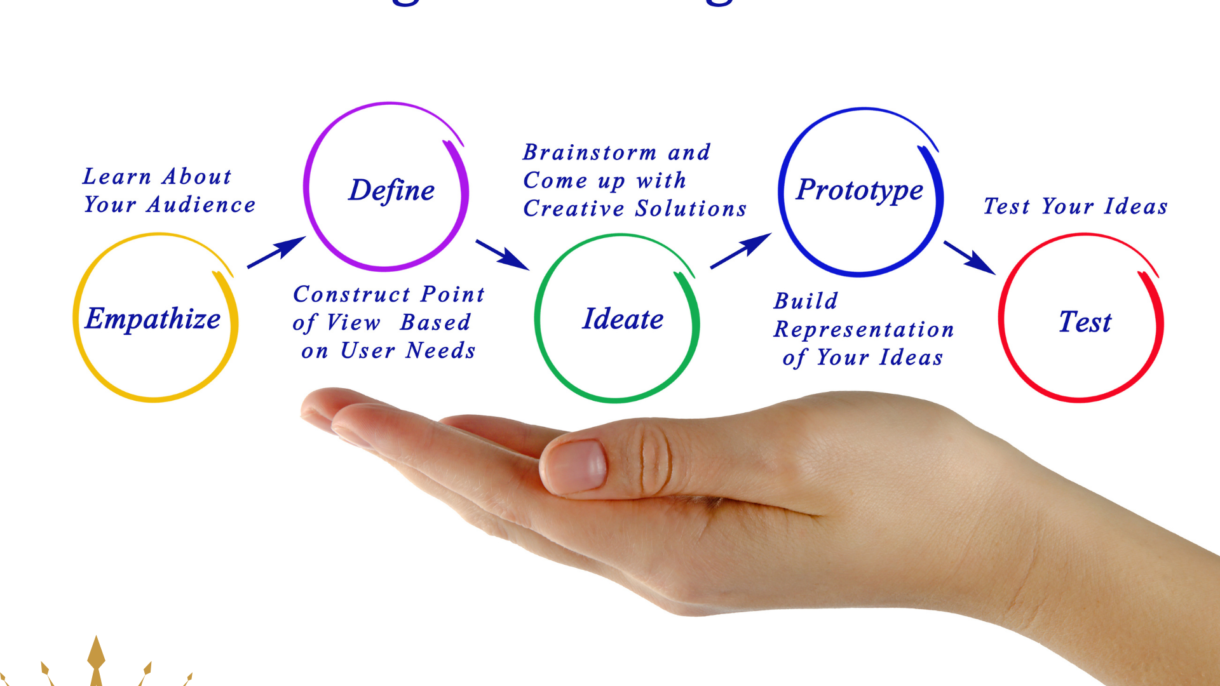
Design thinking is a problem-solving methodology that focuses on understanding the user, challenging assumptions, and redefining problems to identify alternative strategies and solutions. Rooted in creativity and human-centered design, it’s widely used by startups, tech giants, and even traditional industries to foster innovation.
The process typically involves five key steps:
Test: Gather feedback and refine your solution.
Empathize: Understand the needs and challenges of your target audience.
Define: Clearly articulate the problem you aim to solve.
Ideate: Brainstorm and explore a wide range of possible solutions.
Prototype: Develop a tangible version of your idea to test its feasibility.
Real-World Applications
Design thinking isn’t just for big corporations; it’s equally powerful for solopreneurs and small businesses. Here are a few examples of how you can apply it:
- Digital Marketing: Empathize with your audience by analyzing their pain points. Use this insight to craft campaigns that address their needs and evoke emotional responses.
- Web Development: Apply design thinking to improve your website’s user experience. Test prototypes of layouts, features, and navigation to ensure your site is intuitive and engaging.
- Product Design: Use iterative prototyping to develop digital products like apps or software, refining the functionality and interface based on user feedback.
Step-by-Step Guide for Entrepreneurs
Let’s break down how you can start using design thinking in your ventures:
- Identify a Challenge: Choose a specific problem you want to solve. For example, “How can I increase user engagement on my website?”
- Research Your Users: Conduct surveys, interviews, or user testing to understand your audience’s needs, frustrations, and behaviors.
- Brainstorm Solutions: Gather your team or collaborate with peers to generate creative ideas. Use tools like Miro or FigJam for remote brainstorming.
- Build a Prototype: Create a basic version of your solution. For a website, this could be a wireframe; for a marketing campaign, a mockup.
- Test and Iterate: Share your prototype with users, gather feedback, and refine your solution until it aligns with their expectations.
Tools and Resources for Design Thinking
To help you get started, here are some recommended tools and resources:
- Prototyping Tools: Figma, Adobe XD, or InVision for creating visual mockups.
- Collaboration Tools: Miro or FigJam for brainstorming and team ideation.
- Project Management: Notion or Trello to keep your design thinking process organized.
- Learning Resources: Explore IDEO’s “Design Thinking Toolkit” or books like “Change by Design” by Tim Brown.
Conclusion
Design thinking empowers digital entrepreneurs to bridge the gap between creativity and business strategy. By empathizing with your users, ideating innovative solutions, and testing ideas before launch, you can create impactful products and services that stand out in a crowded market. So, the next time you face a business challenge, embrace design thinking—it might just be the key to unlocking your next big breakthrough.
Ready to get started? Apply the steps above to your current project, and see how design thinking transforms your approach to problem-solving!
One reply on “Creative Problem Solving with Design Thinking”
rbt_inbio October 27, 2021 at 3:34 pm
Nulla non ligula vel nisi blandit egestas vel eget leo. Praesent fringilla dapibus dignissim. Pellentesque quis quam enim. Vestibulum ultrices, leo id suscipit efficitur, odio lorem rhoncus dolor, a facilisis neque mi ut ex. Quisque tempor urna a nisi pretium, a pretium massa tristique. Nullam in aliquam diam. Maecenas at nibh gravida, ornare eros non, commodo ligula. Sed efficitur sollicitudin auctor. Quisque nec imperdiet purus, in ornare odio. Quisque odio felis, vestibulum et.